
Most Favoured Nations, Least Favoured Patients? The Inequity Dilemma in an MFN World
The Most Favoured Nation (“MFN”) policy aims to address perceived pricing inequities faced by US patients and to restrain global 'freeloading' on US innovation.
This objective for US domestic drug pricing reform is not a recent phenomenon, with the original proposal for the policy dating back to 2020. In the interim, the Inflation Reduction Act (IRA) was implemented to curb pharmaceutical costs in the US through granting Medicare the authority to negotiate drug prices directly with biopharma and biotech companies. In 2025, MFN reappeared and has since taken shape through three specific models - GENEREOUS, GLOBE and GUARD - representing the first attempt by a US government to establish an International Reference Pricing (IRP) system for pharmaceuticals.
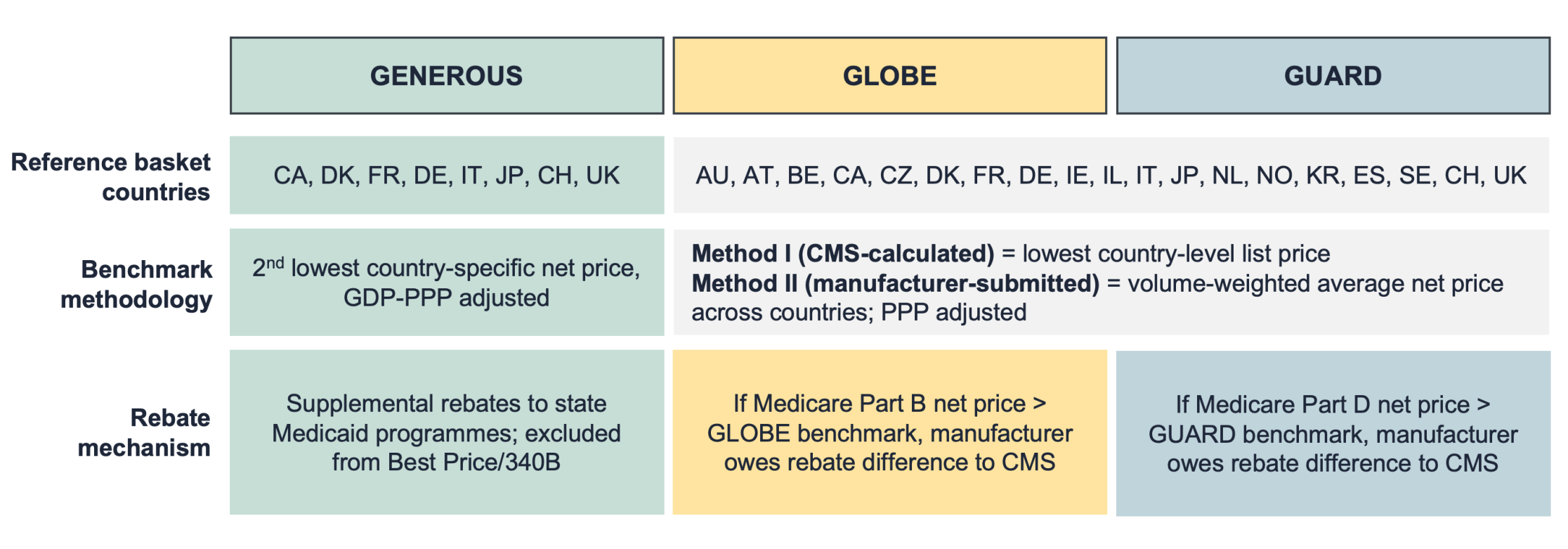
There has been growing concern across global markets that benchmarking US drug prices against markets with historically lower prices could significantly disrupt the otherwise stable balance between the US and ex-US revenue streams.
In Europe specifically, several large pharmaceutical companies have suggested that unless prices are comparable between the reference basket countries and the US, they may face a dilemma: delaying entry into or withdrawing from those markets completely to protect their US business and the largest revenue stream.
“But what that in effect means is we cannot launch in those eight countries unless the prices are comparable. Be it delayed launches, might be no launches. And I think this is a real wake-up call for those markets, which are primarily in Europe, but also Japan and Canada”
Vas Narasimhan, Novartis, Chief Executive Officer Interview with Bloomberg
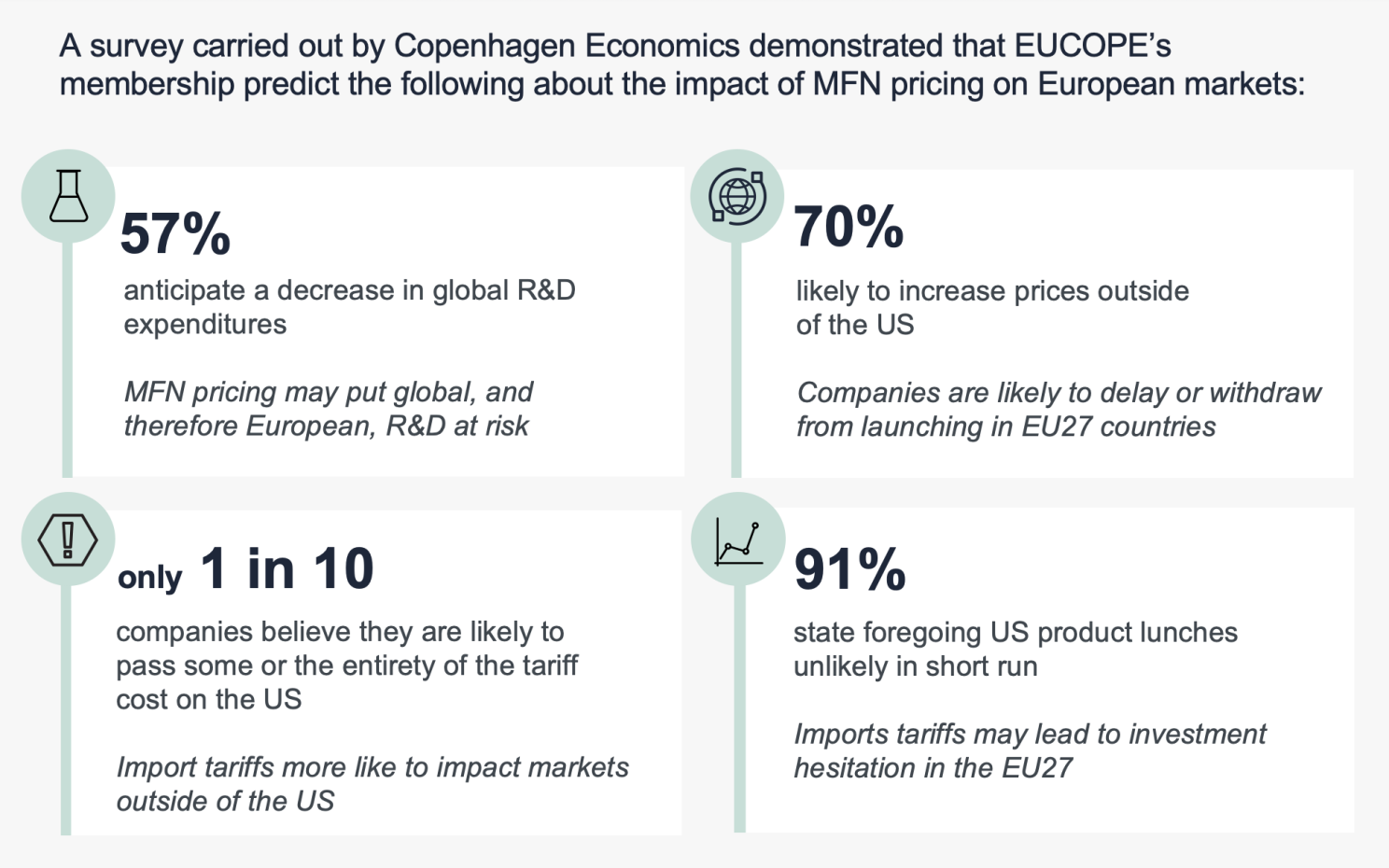
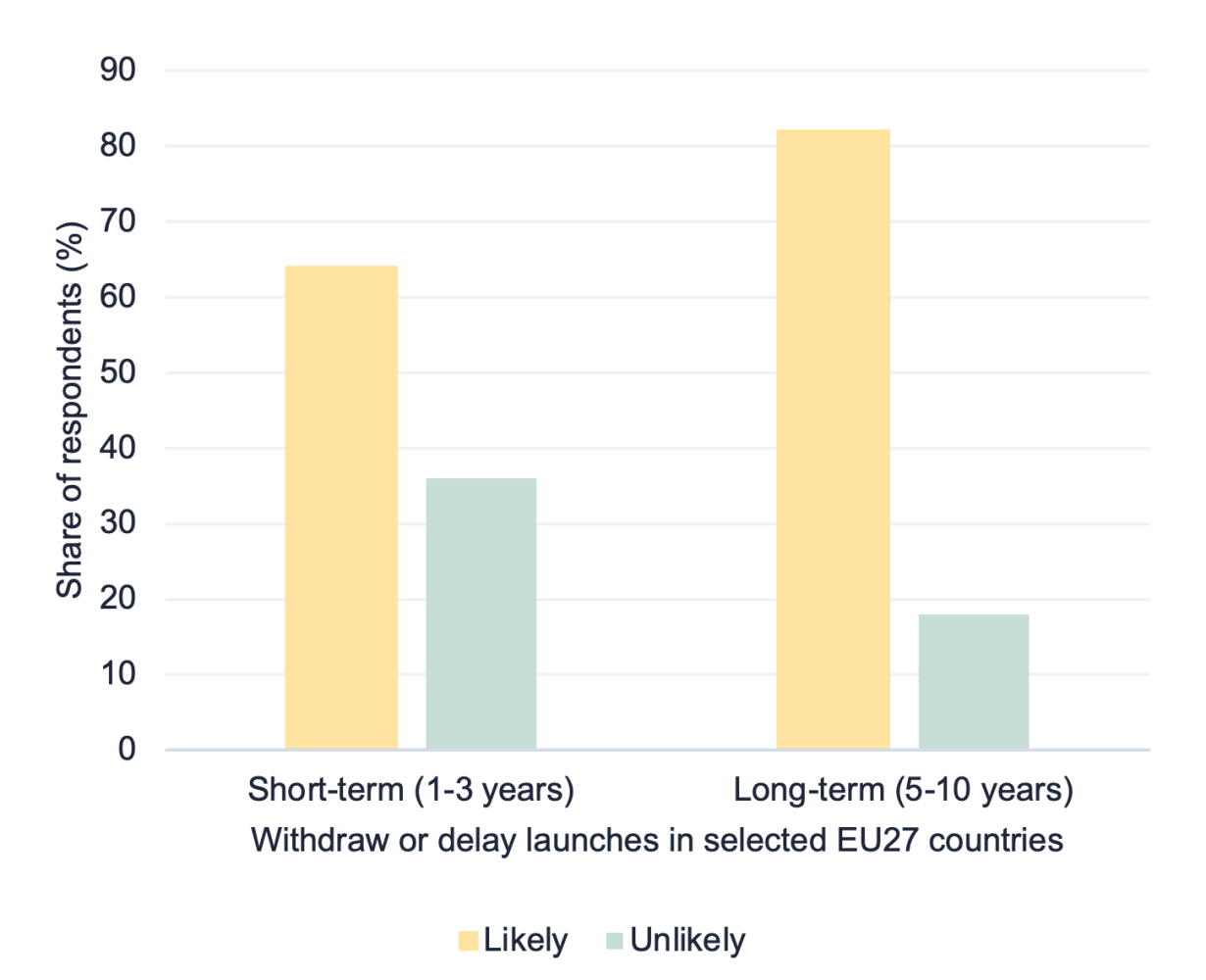
It’s not just large pharma. In a recent study conducted by Copenhagen Economics for the European Confederation of Pharmaceutical Entrepreneurs (EUCOPE) - an industry body representing SMEs in Europe - 91% stated that they would not forgo US product launches in the short term, and the majority of respondents suggested they would consider market withdrawal or launch delay in Europe in both the short and long term.
Within markets, concern has also been expressed at how the evolving MFN policy landscape might divert valuable innovation away from patients in localities perceived to undermine US revenues. In a recent report by Vereniging Innovative Vegeneesmiddelen (VIG) in the Netherlands, concerns were raised regarding launch postponements in smaller markets and R&D being directed out of smaller countries and into more predictable, less 'risky' markets.
“International price comparisons will increasingly have an impact on decisions about where, when and at what (net) price new medicines will be introduced. That is a clear change from the past, in which price discussions mainly take place after introduction.”
Carla Vos, Managing Director, VIG
Is it as simple as raising prices?
The UK has moved first, where under mounting pressure from the threat of US tariffs, the government has pledged to increase the Quality Adjusted Life Year (QALY) threshold used within National Institute for Health and Care Excellence (NICE) appraisals from £20,000-£30,000 per QALY to £25,000-£35,000 per QALY.
Whilst on surface this might be a positive step for an industry that has consistently criticised the value of the NICE threshold, the Association of the British Pharmaceutical Industry (ABPI) has questioned whether it is enough. Furthermore, NICE has also responded by emphasising the importance of maintaining its independence. In reality, if we consider an increase to the NICE cost-effectiveness threshold based purely on inflation since its original introduction, it is likely that the appropriate level is closed to £50,000 per QALY rather than £35,000. This simply demonstrates the strong desire of the UK government to implement some measure to mitigate the emerging international trade risk. Whilst in some way benefitting manufacturers, it has however caused some friction within the UK at a time where the industry needs to remain coherent and aligned for the benefit of patient access.
What’s the case for MFN?
From a purely economic perspective, it could be argued that the drug pricing models for manufacturer rebates under MFN may be the fairest way to install an IRP system. The use of Purchasing Power Parity (PPP) normalises economic conditions to produce a more balanced average. Within the proposed MFN models, market prices under this calculation can only go up, not down, with any modifier below 1 rebased back to unity. Within the baskets, some markets can have prices corrected by up to 50% of their nominal value.
From a US patient perspective, MFN presents an opportunity. Under mounting scrutiny, the policy provides enhanced affordability opportunities within a healthcare system that has underpinned the global industry, providing a transparent and defensible affordability anchor. MFN also supports increased pricing transparency, ensuring decision-making is more explicit and forcing the industry to make clearer justification for global price differences between countries. In this sense, MFN may be the most ethically driven interpretation of reference pricing, building affordability adjustments and prompting equal price logic, even if it does not consider value judgements within its criteria.
In practice, how restrictive is MFN?
In partnership with Sympatics Ltd, Lightning Health has completed an analysis to compare MFN models with other IRP benchmarks in terms of their impact on US drug prices. Using five eligible products, we applied nine pricing methods – four traditional IRP formulas (ranging from highest list to lowest list), the three US MFN approaches, and two additional net-price benchmarks (lowest net and average net) as potential alternative US IRP constructs. The SyMAP® MFN Model simulated each scenario against a 19-country reference basket to determine the relative positioning of US MFN prices against current levels and traditional IRP benchmarks.
Key methodological components include:
- Inclusion of the 19 countries in the GLOBE/GUARD reference baskets: Australia, Austria, Belgium, Canada, Czech Republic, Denmark, France, Germany, Ireland, Israel, Italy, Japan, Netherlands, Norway, South Korea, Spain, Sweden, Switzerland, UK
- Price benchmarking: Ex-US countries apply list prices for IRP calculations; US benchmarks apply net prices to reflect actual transaction values post-rebate
- List-to-net adjustments: Country-specific discount rates applied (7-65% range) based on statutory rebates, confidential negotiations, clawbacks, and payback mechanisms documented across biologics, small molecules, and rare/orphan drugs
- Drug sample: Six high-revenue products from GLOBE (Part B) and GUARD (Part D) programs – Opdivo®, Dupixent®, Keytruda®, Mounjaro®, Skyrizi® – representing biologics, small molecules, and specialty categories with comprehensive international pricing data
- IRP formula variants: Tested lowest / average / highest list / net prices, plus hybrid approaches (GLOBE/GUARD Method 1-2 with the 19 country basket displayed in figure 1, GENEROUS method with the 8 country basket displayed in figure 1) to compare pricing outcomes
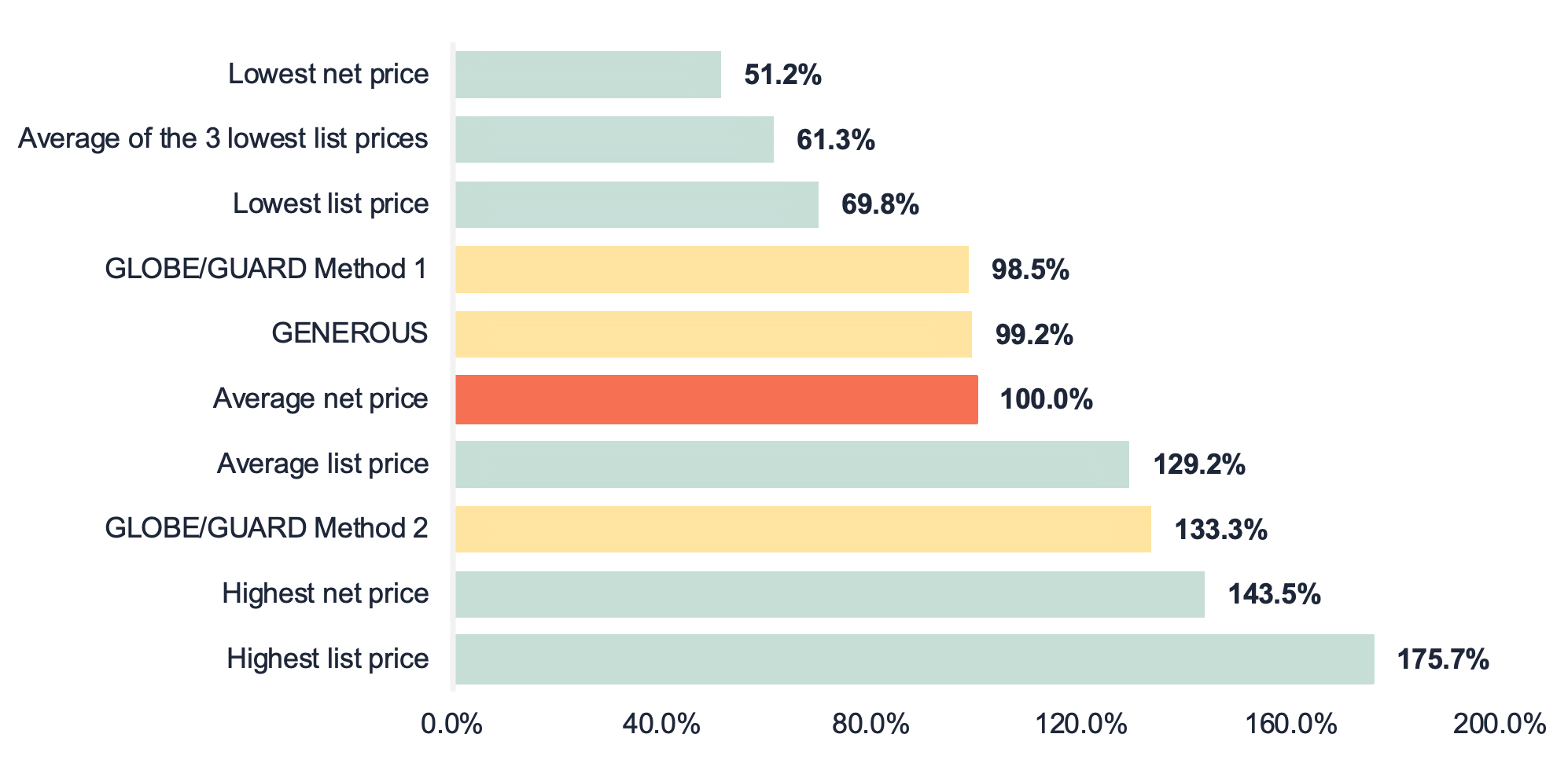
Comparing to average net price as the benchmark for calculating price differential methodologies range from 91.5% (lowest net price) to 175.7% (highest list price). The analysis shows that the current US MFN benchmarks may be less punitive than initially feared. MFN methods sit in the mid to high range. The GENEROUS model outputs are 99.2% of the average net price whilst GLOBAL/GUARD method 1 are 98.5%.
Interestingly, in this example, submission of net prices from across reference markets under Method II of the GLOBE and GUARD frameworks results in a higher US reference price calculation. Of course, this is dependent on the likely delta between list and net prices across reference markets and the concentration of sales used to determine the weighted average. In practice, this model may be prohibitive compared to Method I and the GENEROUS model, given the need to divulge sensitive pricing information that may already be restricted under internal company policies.
Overall, based on the US policy objective for addressing the typically large differential between US and ex-US pricing for pharmaceuticals, this PPP-adjusted MFN framework could be considered an equitable approach to IRP. The challenge lies less in the methodology itself, but in the scale of transition required for manufacturers and healthcare systems.
The inequity problem
Does equivalent pricing between global markets mean equivalent access? Of course, we do not live in a perfect world, and MFN may exacerbate access challenges rather than correct the market. In this context, “launch first, access later” is a thing of the past, and previous blanket global launch strategies for new medicines are increasingly being replaced by launches in fewer markets with greater caution. Furthermore, launch delays and uncertainty will affect some markets more than others, with smaller markets facing particular challenges in avoiding risks that could delay patient access to innovation and threaten investment.
Not all manufacturers are created equal. There is a distinct possibility that only those companies with the broadest and most diverse portfolios can absorb the risks created by MFN, whilst smaller companies with single product or narrow portfolios could simply face too much commercial risk by launching in ex-US markets, potentially threatening revenue and overall business value.
Based on these factors, Europe is increasingly being considered a ‘risk region’ for global pharmaceutical manufacturers. Although significant recent policy developments such as the Biotech Act, Critical Medicines Act, the EU Pharmaceutical Package, and the Joint Clinical Assessment Procedure have been designed with the objective to reduce access delays, increase manufacturer protection, and maintain pharmaceutical investment in Europe, these policies can lack cohesion, are often highly complex and do not directly address significant pricing disparities for many medicines between the US and Europe. In this context, the European region has shifted from a ‘predictable anchor’ to an ‘unpredictable risk factor’.
Overall, a likely consequence of the MFN policy development will be the amplification of the power of the US, rather than correcting the balance of global healthcare expenditure. This was expressed clearly in recent comments from the administration suggesting global prices will rise as a result of MFN, with tariffs being the mechanism to achieve this. Moreover, the short-term void left by delayed or withdrawn medicine launches in Europe may precipitate the shifting of innovation eastwards, with gaps in the European market filled by innovation with lower pricing barriers from localities such as China.
Steps to solve the inequity challenge
In response to the MFN policy development, a blanket policy for raising medicine prices in most ex-US markets is simply not sustainable, with acute considerations regarding affordability and cost-effectiveness.
Access needs must be safeguarded through a more nuanced approach, with coherent and flexible technology assessment systems that move with innovation rather than resist it. For instance, clinical development in areas of significant public interest should be rewarded, while ‘follow-on’ innovations or therapies targeting patient populations with low therapeutic needs should be deprioritised to ensure the most efficient targeting of scarce resources. Furthermore, disinvestment in technologies that no longer represent a cost-effective use of healthcare resources should also be considered as a rational policy objective.
This evolving situation requires a coherent and co-ordinated response from policy markets across European healthcare systems. This should include mechanisms that reward earlier launches in high-value disease areas through better pricing protection, limited rebates and effective risk-sharing between industry and healthcare systems. Measures to ensure the confidentiality of net prices and avoidance of the risk of ‘leakage’ into other IRP system beyond MFN are also likely to be critical in ensuring the continued balance of commercial viability with equitable patient access.
Finally, other funding mechanisms for medicines that avoid the requirement for a listed price should be accelerated, such as subscription frameworks and pay for performance models (implemented through effective partnerships between manufacturers and healthcare systems).
The global outlook, spheres of power
The MFN policy framework, in some form, is unlikely to disappear and several spheres of influence are starting to emerge. In the US, policies originally intended to support patient access by reducing drug prices, have significantly increased the power of the US market, whilst creating high commercial risks associated with conventional pricing and patient access arrangements across European markets. Addressing inherent systemic issues within the US healthcare system, such as the role of Pharmacy Benefit Managers, may have a deeper and more lasting impact than an IRP system that promised to reduce prices but instead has left manufacturers questioning the potential for delaying or avoiding ex-US launches to protect revenue.
The European market now represents a ‘grey area’. Despite marginal efforts at European and member state levels to increase the security, efficiency and commercial value of the European market, constrained healthcare budgets (and associated affordability challenges) create challenging circumstances whereby the region may be deprioritised or removed within the global launch order sequence for new medicines.
Finally, China is seeking to solidify and expand its position as a global economic powerhouse, with high levels of investment of innovative sectors, including healthcare. Investment in Chinese healthcare is currently ten times the level in 2021, and the widely shared sentiment in the industry is that Chinese innovation is starting to surpass the traditional pharmaceutical R&D hubs within the US and Europe. Moreover, the Chinese domestic environment for patient access to innovation is also progressing rapidly, with the launch of the first Commercial Health Insurance Innovative Drugs List (CHIIDL) in December 2025, on which 11 out of 19 drugs are manufactured by Chinese companies. In the event that Europe is increasingly delayed or deprioritised as a global launch market by US-based manufactures, there is high potential that Chinese manufacturers may be willing to ‘fill the void’.
How does it leave industry in the future?
Is there a possibility that MFN rationalises the supplier-purchaser relationship? Could the industry see a significant spike in merger and acquisition activity, leaving only companies with the broadest portfolios able to execute global launch programmes, thereby rationalising the sector? On the purchaser side, could MFN accelerate joint procurement frameworks, consolidating ex-US prices? The truth is nobody knows. What we can see, however, is that global value and access strategies for new medicines must be attuned to the evolving political and foreign policy objectives of the emerging ‘spheres of influence’ alongside the ever-present need for the demonstration of patient relevant clinical, humanistic and economic value.

Related News
Read more about our work in the field